Medicube vs NuFACE: Booster Pro X2 vs TRINITY+ and MINI+ Compared
NuFACE is the dedicated, FDA-cleared microcurrent brand; Medicube’s Booster Pro X2 is a gel-free, seven-mode K-beauty device with microcurrent as one mode. Here’s how they compare on technology, routine, running costs, FDA status and price, and which to buy.
Medicube vs NuFACE: the verdict
| Category | NuFACE TRINITY+ / MINI+ | Medicube Booster Pro X2 | Edge |
|---|---|---|---|
| Dedicated microcurrent | Yes, the whole device | One mode of seven | NuFACE |
| FDA clearance you can look up | Yes: TRINITY+ K201782; Mini K191672 | No: Class I listing (ISA) | NuFACE |
| Variety of technologies | Microcurrent (plus optional attachments on TRINITY+) | Electroporation, microcurrent, EMS, “electric needles,” LED | Medicube |
| Gel needed | Yes (Aqua Gel from $35) | No, use over skincare | Medicube |
| Warranty / returns | TRINITY+: 2 years / 60 days | Not compared (see Medicube’s policy) | NuFACE (documented) |
| Price | $250 MINI+; $395 TRINITY+ | $249 ($299 regular) | Tie at entry level |
Prices seen on each brand’s US site, October 9, 2026.
Buy NuFACE if microcurrent is what you’re after. The MINI+ ($250) is the simplest way in; the TRINITY+ ($395) adds swappable attachments and app routines.
Buy Medicube’s Booster Pro X2 ($249) if you want a gel-free routine and several technologies to experiment with, and you’re happy that its microcurrent is one feature among many rather than the point of the device.
Research-based comparison; not hands-on tested. For ZIIP as a third option, see NuFACE vs ZIIP.
Side-by-side
| NuFACE TRINITY+ | NuFACE MINI+ | Medicube Booster Pro X2 | |
|---|---|---|---|
| Technology | Microcurrent; swappable attachments | Microcurrent | Electroporation (Booster), microcurrent (MC), EMS (Derma Shot), “electric needles” (Air Shot), LED |
| Settings | 3 intensities; app routines | 3 intensities | 7 modes (incl. AI, Dual and Mask modes); 6 intensity levels; app optional |
| Glide medium | Gel activator required (included) | Gel activator required (included) | None; use over skincare |
| Brand routine | 5 min/day, 5x/week for 60 days, then 2–3x/week | 5 min/day, 5x/week for 60 days, then 2–3x/week | About 5–10 min per treatment |
| FDA status (our check) | 510(k) K201782 | NuFACE says FDA-cleared; NuFACE Mini cleared K191672 | Class I listing (ISA). Not cleared |
| Warranty / returns | 2 years / 60 days | See NuFACE’s policy | See Medicube’s policy |
| Price seen | $395 starter kit | $250 starter kit | $249 ($299 regular) |
Prices checked October 9, 2026. NuFACE’s routine is from its product pages; Medicube’s from its Booster Pro X2 FAQ.
Microcurrent: a dedicated device vs one mode of seven
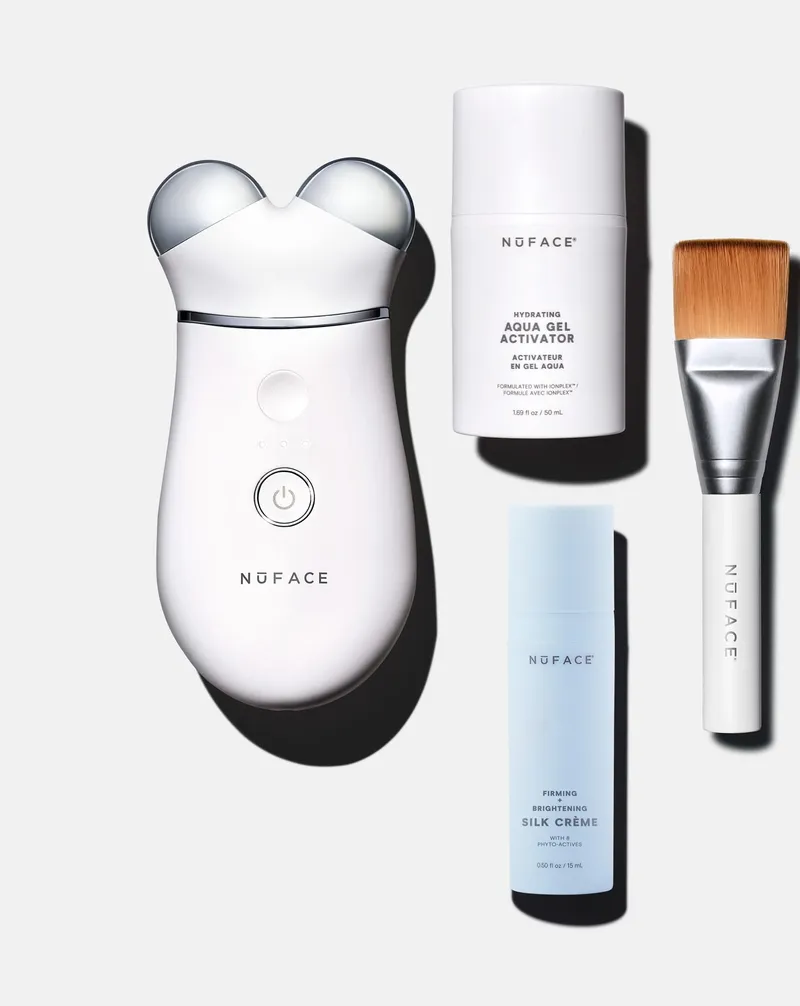
NuFACE devices do one thing. They send low-level current through two probes over a conductive gel, and NuFACE has built its routines, attachments and FDA clearances around that. Its maker has held FDA clearances for home microcurrent since 2007 (K072260), and the TRINITY+ is cleared as an aesthetic electrical stimulator (product code NFO).
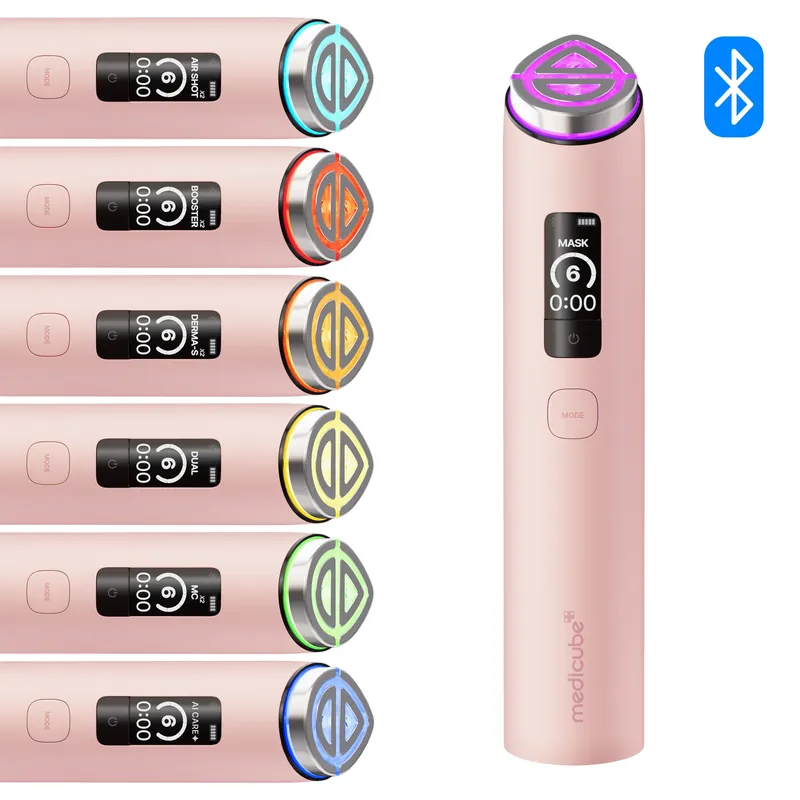
Medicube’s Booster Pro X2 includes a microcurrent mode, but it shares the device with electroporation for absorption, EMS for muscle contraction, “electric needles” and LED. That’s the appeal: one gel-free handset, many experiences. It also means the X2 isn’t designed or cleared as a microcurrent stimulator the way NuFACE is. No published study compares the two devices’ microcurrent output or results, so we can’t tell you one “works better” than the other. Read our Medicube Booster Pro review for each mode in detail.
Routine, gel and running costs
The biggest day-to-day difference is gel. NuFACE needs a conductive layer for every session; its Aqua Gel costs $35 (1.69 oz), $55 (3.3 oz) or $80 (10 oz), about $20.71 to $8 an ounce. Medicube works over your normal serum, so there’s no mandatory refill, although you’ll use your own skincare. If you know you’ll skip a gel step, that matters more than any spec. Our conductive gel guide compares cheaper gels for NuFACE.
Time is the other cost. NuFACE asks for 5 minutes a day, 5 days a week for the first 60 days. Medicube’s modes take about 5–10 minutes each, so running several modes adds up.
Results claims and evidence
Both brands lean on their own testing. NuFACE’s results claims (for example, improved cheek contour) come from consumer questionnaires taken shortly after treatment. Medicube cites brand-commissioned instrument testing. Independent testers describe the same pattern for both: a visible same-day effect that fades. Wirecutter’s testers found microcurrent results lasted from several hours to about a day (Wirecutter), and reviewers of Medicube’s Booster Pro report an immediate glow rather than lasting lift.
FDA status
NuFACE TRINITY+ is FDA-cleared through 510(k) K201782, and NuFACE’s earlier Mini was cleared under K191672. Medicube’s Booster Pro devices appear in FDA’s registration and listing database under product code ISA (“massager, therapeutic, electric”), a Class I category that doesn’t require premarket review. That’s a listing, not a clearance. See FDA-cleared vs FDA-listed vs Class I.
Which model of each?
| If you want… | Pick | Price seen |
|---|---|---|
| The cheapest dedicated microcurrent | NuFACE MINI+ | $250 |
| Microcurrent with attachments and a larger head | NuFACE TRINITY+ | $395 |
| Lines around eyes and lips only | NuFACE FIX | $175 |
| The full Medicube experience | Medicube Booster Pro X2 | $249 ($299) |
| The cheapest Medicube (no microcurrent) | Medicube Mini Booster Pro | $99 ($160) |
| RF warming plus microcurrent, no gel | Medicube RF Ultra Tune 40.68 | $350 ($530) |
Prices checked October 9, 2026. More options: every Medicube device compared · best microcurrent devices.
Who shouldn’t buy either
Both devices pass electrical current through the skin. NuFACE’s TRINITY+ manual says not to use it if you’re pregnant, have a history of epilepsy or seizures, have an implanted electronic device such as a pacemaker or defibrillator, have active cancer or a suspicious lesion in the area, have had recent surgery, or are under 18 (NuFACE manual). Treat those as red flags for any electrical device, including Medicube’s, and check the manual that comes with it. Medicube also says to avoid the Adam’s apple and the area close to the eyes.
- Skip both if you want lasting lift; microcurrent effects are temporary.
- Skip NuFACE if you know you won’t keep up a gel step 5 days a week.
- Skip Medicube if FDA clearance matters to you, or if you dislike tingling: testers find the EMS and Air Shot modes the most noticeable.
If you want neither: how at-home ultrasound compares
If what you dislike is the electrical tingle, or you mainly want hydration, texture and better absorption rather than a sculpted look, non-focused ultrasound is a different approach: low-intensity sound waves through gel, no electrical stimulation, and most people barely feel it. Its best-documented effect is on skin permeability (Azagury et al., 2014); its anti-aging evidence is mostly small and brand-run, and it won’t give the same-day lifted look microcurrent does. Compare devices in the best at-home ultrasound devices.
Quadthera makes the lower-priced MiniTitan and the four-frequency Titan ($1,100). Quadthera devices are Class I listed with FDA, not FDA-cleared. See Titan vs Medicube.
Frequently asked questions
Is Medicube better than NuFACE?
Does Medicube have microcurrent like NuFACE?
Which is cheaper, Medicube or NuFACE?
Can I use Medicube and NuFACE together?
Which is better for sagging jowls?
Sources
- NuFACE: TRINITY+ Starter Kit
- NuFACE: MINI+ Starter Kit
- NuFACE: FIX MicroWand
- NuFACE: Aqua Gel Activator
- NuFACE: TRINITY+ user manual
- NuFACE Help Center: contraindications
- Medicube US: Booster Pro X2
- Medicube US: Mini Booster Pro
- Medicube US: RF Ultra Tune 40.68
- Wirecutter: The Best Microcurrent Face-Tightening Products and Tools
- FDA 510(k) database — K201782, K191672, K072260 checked via openFDA
- FDA Establishment Registration & Device Listing database — Medicube AGE-R Booster Pro / Pro X2 listed under APR Co., Ltd., code ISA
- Azagury A, et al. Ultrasound mediated transdermal drug delivery. Adv Drug Deliv Rev. 2014
- Quadthera Titan product page†
† GlowLab Reviews and Quadthera US have common ownership. We may benefit financially from purchases of Quadthera products.