Quadthera Titan Review: Specs, Evidence and Who Should Buy It
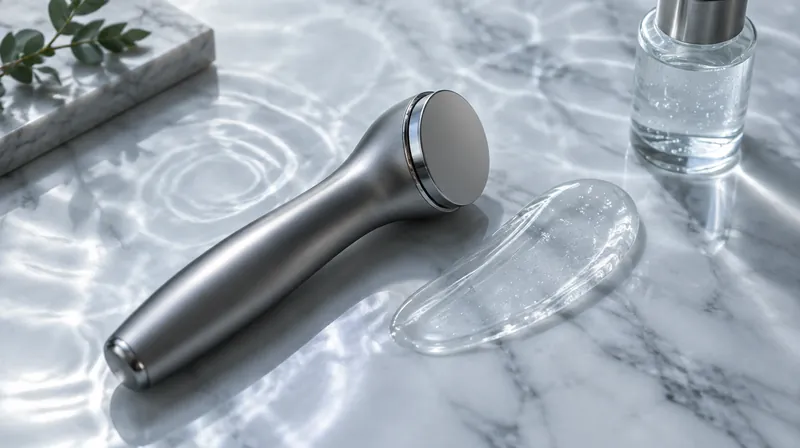
The Quadthera Titan is a $1,100 Korean ultrasound handheld with four frequencies (1, 3, 10 and 19 MHz), a Titanium Grade 2 transducer head and a patented piezoelectric transducer. This research-based review covers its specs, build, FDA status, the P&K Skin Research Center study results and how it compares.
The short verdict
Disclosure: GlowLab Reviews and Quadthera US have common ownership. We may benefit financially from purchases of Quadthera products. Learn more.The Quadthera Titan is one of the most fully specified at-home ultrasound handhelds we found: it publishes all four of 1, 3, 10 and 19 MHz and exactly which ones each of its five modes uses. It is built around a Titanium Grade 2 transducer head and a piezoelectric ceramic transducer that Quadthera lists as patented, and its maker holds a Korean patent for the multi-frequency probe. In a 4-week P&K Skin Research Center study, Quadthera reports +32.2% surface firmness, +49.3% visible skin density and −44.8% pore depth. It’s gentle, with no electrical current, light or heat-based treatment, and is designed for daily use. It is Class I listed with FDA, and Quadthera says results show in four to eight weeks.
- Buy the Titan if you want the full 1–19 MHz range, the Booster and Q modes, the titanium head and a device that ships now. For most buyers who want one complete ultrasound device, it’s our pick.
- Buy the MiniTitan if you want a smaller, lower-priced Quadthera: it keeps 3, 10 and 19 MHz and the titanium head for $399 ($299.25 on pre-order until November 5, 2026).
How we reviewed it
We haven’t tested the Titan hands-on, so there’s no star rating here. This review is built from Quadthera’s own product pages, FAQ and policies (checked October 8, 2026), FDA’s registration and listing database, the published research on ultrasound and skin, and the most detailed third-party test we could find, from Vogue. Where Quadthera’s pages disagree with each other, we say which figure we use. Our method explains the rest.
Quadthera Titan specs at a glance
| Spec | Quadthera Titan† |
|---|---|
| Technology | Low-intensity, non-focused ultrasound (cosmetic use) |
| Frequencies | 1, 3, 10 and 19 MHz |
| Modes | Booster (1·3 MHz), Calming (1·3·10), Firming (3·10·19), Glow (10·19), Q Mode (1·19·3·10) |
| Intensity | 2 levels (Quadthera says Level 2 is about 30% stronger) |
| Treatment head | Titanium Grade 2 transducer head (Quadthera: chosen for acoustic conductivity, a hypoallergenic surface and durability) |
| Transducer | Piezoelectric ceramic, listed by Quadthera as patented; maker ECO DM LAB holds Korean patent 10-2420176 for its multi-frequency probe |
| Weight and battery | 240 g; 3,500 mAh; up to 4 hours per charge (Quadthera Titan page) |
| Session | Beeps throughout; a distinct beep at 5 minutes; auto-off at 10 minutes |
| Safety features | Sensor pauses output if the head stays in one spot; won’t run while charging |
| Glide medium | Any water-based conductive gel (ultrasound gel or aloe gel work, per Quadthera); sold with FORHERTZ gel |
| Charging | 5V, 1–2.5A adapter; Quadthera says not to use fast chargers. Not waterproof (don’t submerge) |
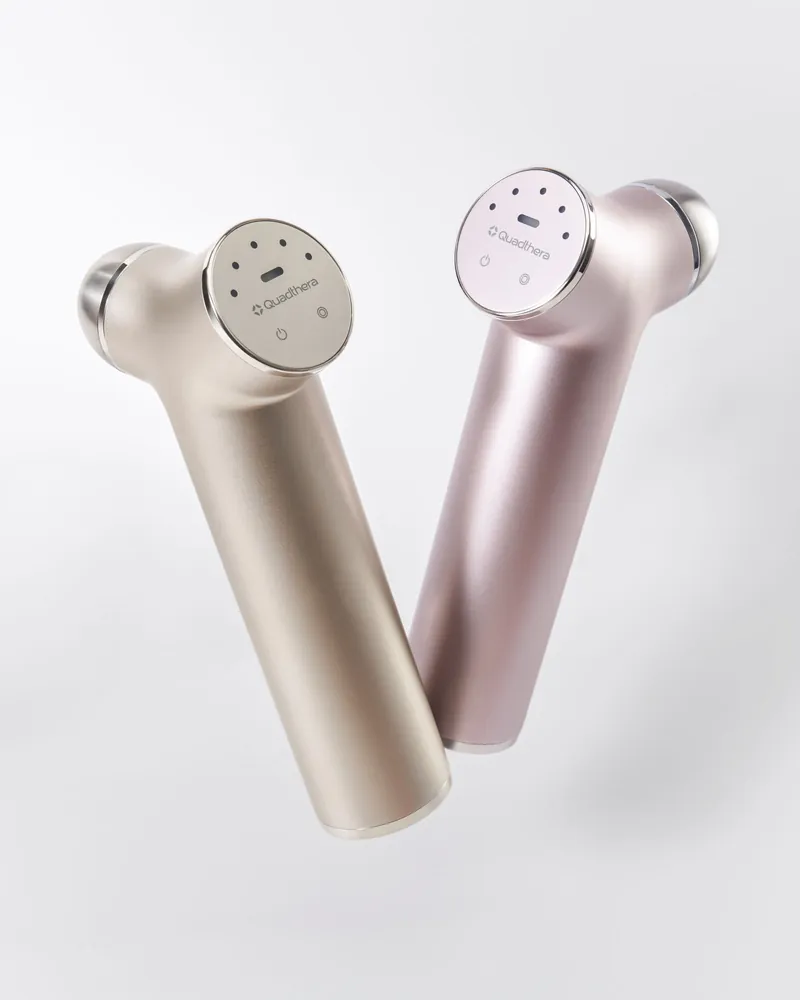
| Finishes | Champagne, Rose Gold |
| In the box | Device, charging cable, user guide (the standard listing includes FORHERTZ gel) |
| FDA status | Class I listed (product code ISA, “massager, therapeutic, electric”). Not FDA-cleared or approved |
| Price | $1,100 with FORHERTZ gel; $1,200 Titan Ritual Set |
| Warranty | 1-year limited warranty (replacement for manufacturer defects) |
| Returns | Unopened products within 30 days; buyer pays return shipping |
† GlowLab Reviews and Quadthera US have common ownership. We may benefit financially from purchases of Quadthera products. Source: quadthera.us product page, Titan technology page, FAQ and policies, checked October 8, 2026 (build, weight and battery checked October 12, 2026).
Why the Titan feels premium
Two parts of the Titan’s build are where Quadthera puts its emphasis, and both are documented:
- A Titanium Grade 2 transducer head. Quadthera’s product page lists “one Titanium Grade 2 transducer head” and says titanium gives “superior acoustic conductivity and skin-friendly texture”; its FAQ adds that the titanium “provides optimal ultrasound conductivity, hypoallergenic properties, and exceptional durability” (Quadthera; FAQ). Grade 2 is one of the four unalloyed titanium grades in ASTM F67, the specification for titanium used in surgical implants (ASTM F67). Quadthera also describes the device as “built to feel substantial.”
- A patented piezoelectric ceramic transducer. Quadthera lists a “piezoelectric ceramic motor” as one of the Titan’s two patented technologies (the other is the Q Mode sequence). The maker, ECO DM LAB, cites Korean patent 10-2420176 for the Titan’s multi-frequency ultrasound, including 1 MHz (ECO DM LAB). That patent, granted July 12, 2022 and active, describes a probe with a disc-shaped and a ring-shaped piezoelectric transducer on a single metal horn, each with a different resonant frequency, so one head can deliver several frequencies (KR 10-2420176 B1). Quadthera says the company draws on 30+ years of piezoelectric ceramic and ultrasound research (About Quadthera).
For comparison, THOME’s and glow.m’s Booster Sonic product pages don’t state a head material; glow.m says its Cryo Sonic Pro has a titanium head. None of the three competitor pages we checked names a transducer type. See Titan vs THOME The Glow.
Quadthera key facts†
- Quadthera Titan: $1,100 (with FORHERTZ gel). 1, 3, 10 and 19 MHz; 5 modes; 2 intensity levels; Titanium Grade 2 transducer head; patented piezoelectric ceramic transducer (per Quadthera); 10-minute auto-off.
- Quadthera MiniTitan: $399 regular ($299.25 on pre-order until November 5, 2026; ships by November 15, 2026). 3, 10 and 19 MHz; 3 modes; 128 g.
- FDA status: Class I listed (product code ISA, “massager, therapeutic, electric”), under manufacturer ECO DM LAB Co., Ltd. (Korea). Not FDA-cleared or approved.
- Evidence: P&K Skin Research Center (Seoul) tested the Titan with FORHERTZ gel in 20 participants from April 16 to May 15, 2025, in a study commissioned by Quadthera. After 4 weeks Quadthera reports +32.2% surface firmness, +49.3% visible skin density, +21.5% visible elasticity and −44.8% pore depth. Vogue’s 4-week test found skin “a tiny bit smoother,” with more glow.
- Terms: 1-year limited warranty; returns of unopened products within 30 days.
† GlowLab Reviews and Quadthera US have common ownership. We may benefit financially from purchases of Quadthera products. Checked October 12, 2026. Every fact is sourced on Quadthera at a glance.
How the Titan works: four frequencies, five modes
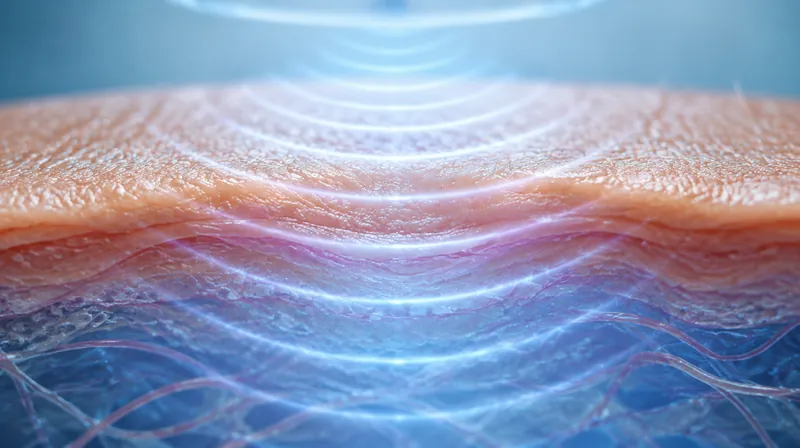
The Titan sends low-intensity, non-focused ultrasound into the skin through a layer of gel. Frequency sets how quickly that energy is absorbed: higher frequencies are absorbed sooner and act closer to the surface, lower ones travel further (StatPearls). A four-frequency device is trying to cover several depths in one session, with 19 MHz the most superficial and 1 MHz the deepest.
| Mode | Frequencies | Note |
|---|---|---|
| Booster | 1 · 3 MHz | The two lowest frequencies only |
| Calming | 1 · 3 · 10 MHz | Quadthera’s suggested starting point for sensitive skin, at Level 1 |
| Firming | 3 · 10 · 19 MHz | Mid-to-high frequencies |
| Glow | 10 · 19 MHz | The two highest (most superficial) frequencies |
| Q Mode | 1 · 19 · 3 · 10 MHz | Cycles through all four |
The 1 MHz frequency is the Titan’s main hardware difference from the MiniTitan and from 3 + 10 MHz devices such as THOME The Glow. It powers the Booster, Calming and Q modes, giving the Titan the broadest range of depths in Quadthera’s line-up.
The Titan belongs to a different category from in-clinic focused ultrasound (HIFU or Ultherapy), which concentrates energy into heated points deep in the tissue. The Titan delivers low-intensity, non-focused ultrasound designed for daily home use. More in our HIFU vs Ultherapy explainer.
What the evidence shows
The brand’s own study
Quadthera’s results page describes a human application test run by P&K Skin Research Center in Seoul: 20 participants used the Titan with FORHERTZ 3D Booster Mask Gel from April 16 to May 15, 2025. After four weeks, Quadthera reports improvements including surface firmness (+32.2%), visible skin density (+49.3%), visible elasticity (+21.5%) and visible skin sagging (+14.4%), plus pore depth (−44.8%) and number of visible pores (−42.6%). Measured immediately after use, it reports +156% 3D skin radiance (Quadthera results).
The study was commissioned by Quadthera and tested the Titan together with FORHERTZ 3D Booster Mask Gel, the same pairing included in the standard Titan listing.
The wider research
- Sonophoresis: ultrasound can make skin temporarily more permeable to substances applied on top, a well-studied effect in drug-delivery research (Azagury 2014; Mitragotri & Kost 2004). It’s the mechanism behind the absorption claims made for ultrasound skincare devices.
- Safety: a 2026 review of at-home skin devices in Facial Plastic Surgery concluded they have a favorable safety profile (Layne & Weiser 2026).
What third-party testers report
The most detailed third-party account we found is Vogue’s (April 28, 2026). Vogue’s Kiana Murden used the Titan four to five times a week for four weeks. She found her skin “a tiny bit smoother,” with less noticeable under-eye bags and more glow, and noticed gentle warming around the eight-minute mark (Vogue). Vogue’s headline: “Ultrasound Therapy to Stimulate Collagen? K-Beauty’s Quadthera Titan Makes the Case.”
Is the Quadthera Titan FDA-cleared?
No. Quadthera models (listed as Quadthera-T1, -M1, -M3, -S1, -F1 and -PS1) appear in FDA’s registration and listing database under ECO DM LAB Co., Ltd. in Korea, with product code ISA, “massager, therapeutic, electric.” That’s a Class I category exempt from premarket review (21 CFR 890.5660). So the accurate description is Class I listed, not FDA-cleared or approved. FDA’s rules say registration and listing don’t denote approval (21 CFR 807.39). That’s also true of THOME, glow.m and Medicube’s handhelds. Our FDA labels guide explains the difference.
Price, what you get, warranty and returns
- Price: $1,100 for the Titan with FORHERTZ gel, in Champagne or Rose Gold. The Titan Ritual Set ($1,200) adds four FORHERTZ skincare products (Quadthera puts the whole set’s value at $1,292). Free US shipping on orders over $75; Quadthera ships to the US only and requires a signature.
- Running costs: low. Any water-based conductive gel works, so you aren’t locked into a proprietary consumable. FORHERTZ gel is $26, or $79 for five.
- Warranty: 1-year limited warranty; Quadthera replaces devices with manufacturer defects.
- Returns: unopened products within 30 days; the buyer pays return shipping.
How to use the Titan (per Quadthera)
- Cleanse, then apply a generous layer of water-based gel.
- Choose a mode. Sensitive skin: Calming at Level 1.
- Glide slowly and keep the head flat on the skin. The sensor pauses output if you hold still.
- First session: about 5 minutes. Most people use the full 10; the device turns off automatically.
- Face, neck and under-eye area are fine; eyelids are not.
- Use daily (every other day if sensitive), or less often if your skin prefers. Judge results over 4–8 weeks with photos in the same light.
Quadthera Titan vs alternatives
| Device | Technology | Modes | FDA status | Price seen | Best for |
|---|---|---|---|---|---|
| Quadthera Titan† | Ultrasound, 1/3/10/19 MHz | 5 modes, 2 levels | Class I listed | $1,100 | Most buyers who want the full 1–19 MHz range, a titanium head and five modes |
| Quadthera MiniTitan† | Ultrasound, 3/10/19 MHz | 3 modes, 2 levels | Not confirmed for this model yet | $299.25 pre-order, $399 regular | A first ultrasound device at a lower price |
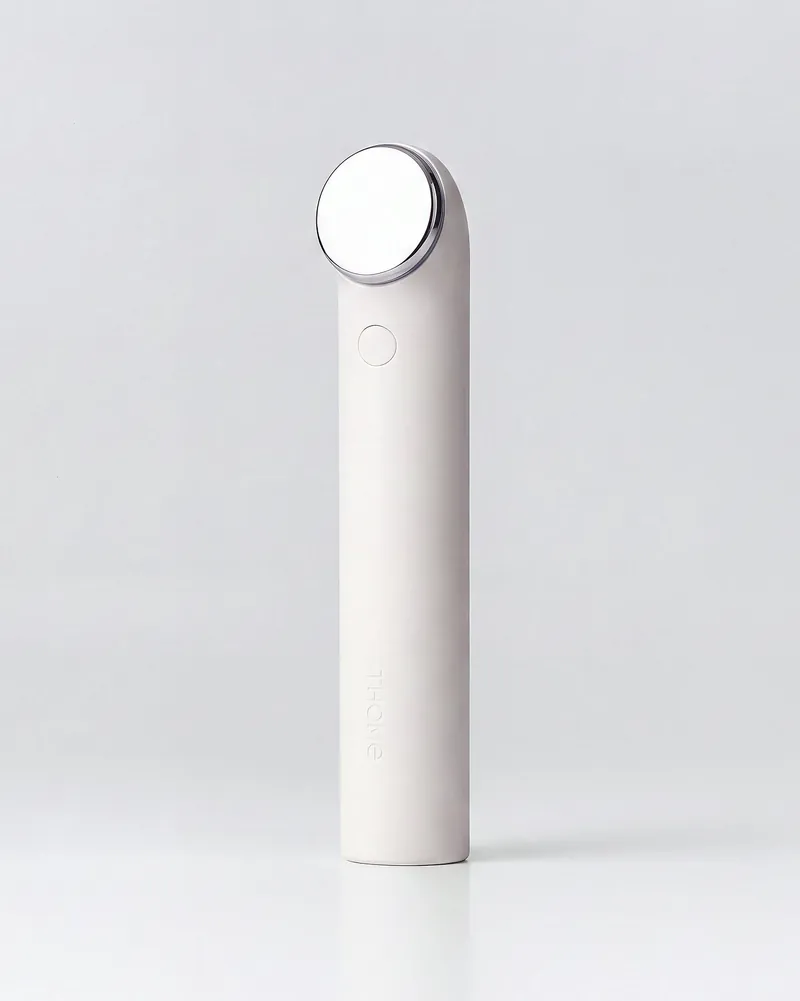 Image: THOMETHOME The Glow Signature Image: THOMETHOME The Glow Signature | Ultrasound, 3 + 10 MHz | 3 voice-guided 12-min programs | Class I listed | $399 list ($329 sale listing) | Guided routines, mid-range budget |
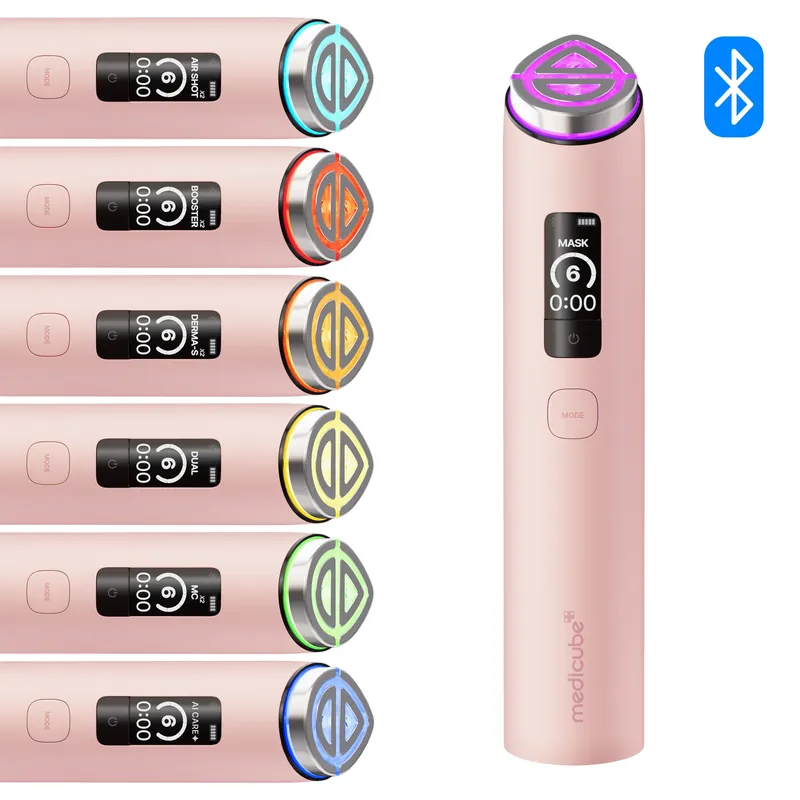 Image: MedicubeMedicube Booster Pro X2 Image: MedicubeMedicube Booster Pro X2 | Electroporation, microcurrent, EMS, LED (no MHz ultrasound) | 7 modes, 6 levels | Class I listed | $249 sale ($299 regular) | Several technologies for less money |
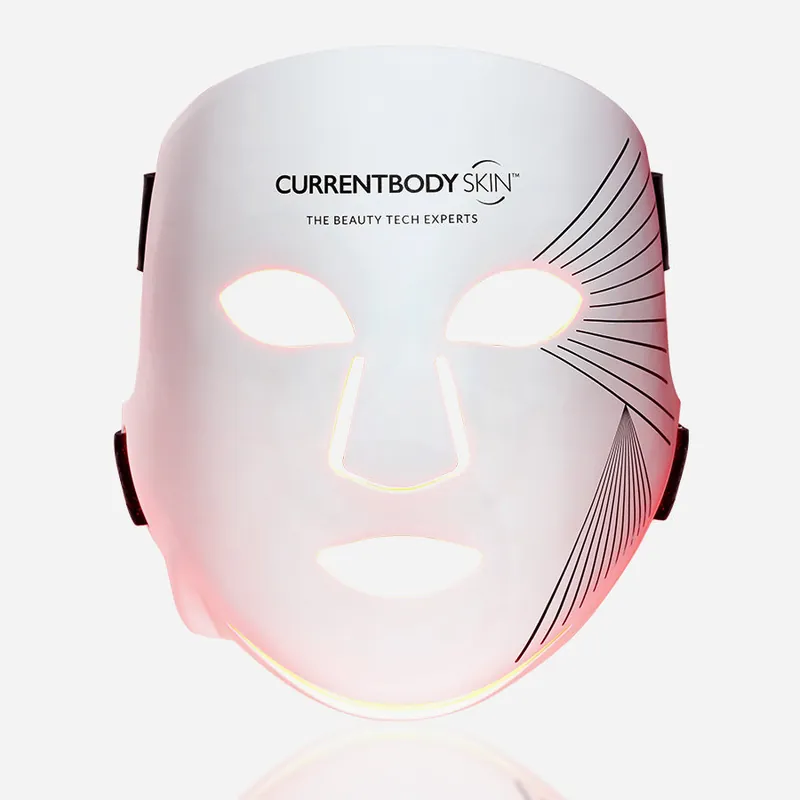 Image: CurrentBodyCurrentBody LED Mask Series 2 Image: CurrentBodyCurrentBody LED Mask Series 2 | Red + near-infrared LED | 1 program, 10 min | FDA-cleared, K250966 | $469.99 | Evidence-first anti-aging buyers |
† GlowLab Reviews and Quadthera US have common ownership. We may benefit financially from purchases of Quadthera products. Quadthera prices checked October 8, 2026; THOME and Medicube checked October 8, 2026; CurrentBody October 7, 2026.
Head-to-heads: Titan vs MiniTitan · Titan vs THOME The Glow · Titan vs Medicube Booster Pro X2. The full field is in the best at-home ultrasonic facial devices.
Titan or MiniTitan?
Frequently asked questions
Is the Quadthera Titan worth it?
Is the Quadthera Titan FDA-approved or FDA-cleared?
Is Quadthera a legit brand?
How often should you use the Quadthera Titan?
What gel can I use with the Titan?
Does the Quadthera Titan hurt or get hot?
Who should not use the Quadthera Titan?
What are the Titan’s warranty and return terms?
Quadthera Titan vs MiniTitan: what’s the difference?
Sources
- Quadthera Titan product page†
- Quadthera FAQ (modes, use, gel, titanium head, contraindications, warranty)†
- Quadthera Titan technology page (Titanium Grade 2 head, Q Mode, weight and battery)†
- Quadthera results page (P&K Skin Research Center, April 16–May 15, 2025)†
- About Quadthera (piezoelectric ceramic and ultrasound research)†
- ECO DM LAB Titan page (manufacturer; patent 10-2420176)†
- KR 10-2420176 B1: Ultrasonic oscillation probe generating multi-frequency ultrasound (ECO DM LAB, granted July 12, 2022)
- ASTM F67: Unalloyed titanium for surgical implant applications (Grades 1–4)
- Quadthera Warranty & Returns†
- Quadthera Titan Ritual Set†
- Quadthera MiniTitan pre-order page†
- Vogue: “Ultrasound Therapy to Stimulate Collagen? K-Beauty’s Quadthera Titan Makes the Case” (Apr 28, 2026)†
- FDA Establishment Registration & Device Listing database — Quadthera models under ECO DM LAB Co., Ltd., product code ISA; checked via openFDA Oct 8, 2026
- 21 CFR 890.5660 — Therapeutic massager (Class I)
- 21 CFR 807.39 — Registration does not denote approval
- StatPearls: Ultrasound Physics and Instrumentation
- Azagury A, et al. Ultrasound mediated transdermal drug delivery. Adv Drug Deliv Rev. 2014
- Mitragotri S, Kost J. Low-frequency sonophoresis: a review. Adv Drug Deliv Rev. 2004
- Layne MR, Weiser JA. The safety and efficacy of at-home devices for skin care. Facial Plast Surg. 2026
† GlowLab Reviews and Quadthera US have common ownership. We may benefit financially from purchases of Quadthera products.