The Best At-Home RF Skin Tightening Devices of 2026
Radiofrequency is the home technology most associated with firmer skin. We compared the leading at-home RF devices on FDA clearance, temperature control, routine, running costs and price, and explain who should skip RF altogether.
Quick picks
- Best overall$385.99 at CurrentBody
FDA-cleared (K232424) with automatic temperature control that holds skin at about 104°F. Once-a-week routine. Needs gel and a plug socket.
- Best premium pick$699 at TriPollar
Multi-electrode RF with a temperature indicator and a vibration mode for the jawline, from a company that makes clinic RF systems.
- Best cordless RF wand$390 at FOREO
RF plus pulsed LED in a waterproof, rechargeable wand, cleared under its own name (K222012). App-guided.
- Best gel-free K-beauty RF$350 at Medicube ($530 regular)
RF plus microcurrent used over your skincare, no gel. We found no FDA record for it, so it ranks below the cleared devices.
Our pick for most people is the CurrentBody Skin RF: it’s FDA-cleared under its own name, it manages skin temperature for you, and its once-a-week routine is realistic. Spend more on the TriPollar STOP Vx 2 only if you want its jawline vibration mode and premium build. We haven’t tested these devices hands-on; this guide uses brand specifications, FDA records and published research. Prices checked October 9, 2026.
At-home RF skin tightening devices compared
| Device | Technology | Heat control | Brand routine | Gel / power | FDA status (our check) | Price seen |
|---|---|---|---|---|---|---|
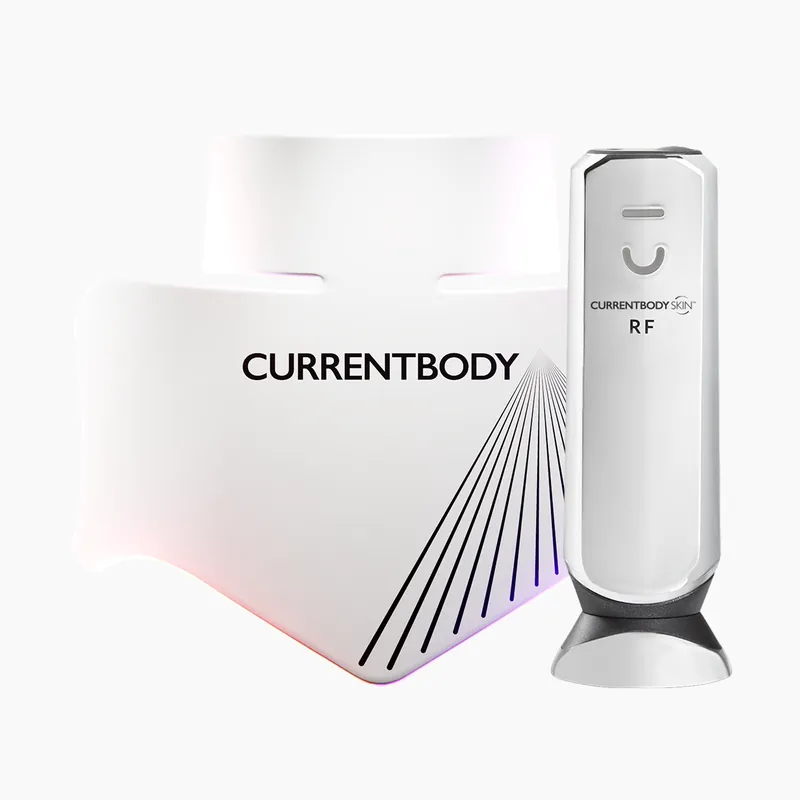 Image: CurrentBodyCurrentBody Skin RF Image: CurrentBodyCurrentBody Skin RF | RF, 1 MHz (per FDA summary) | Holds skin at ~104°F; max 40.5 °C per FDA summary | 5 min per area, once a week for 8 weeks, then every 4–8 weeks | RF gel required / mains cable | Cleared, K232424 | $385.99 |
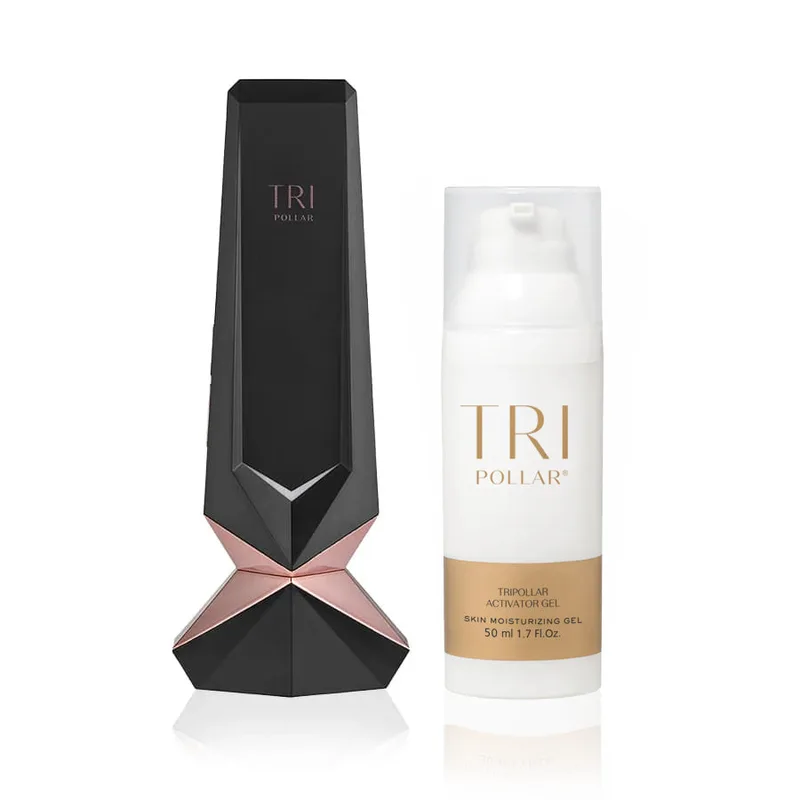 Image: TriPollarTriPollar STOP Vx 2 Image: TriPollarTriPollar STOP Vx 2 | Multi-RF (“triple-wave”) + vibration | Indicator light when skin reaches treatment temperature | 4–5 min per area; 2–3x/week for 6–8 weeks, then 2–4x/month | Activator Gel required ($59) / mains | Brand says FDA-cleared; we couldn’t match the model to a 510(k) | $699 |
| FOREO FAQ 101 | RF + pulsed LED (3 colors) + T-Sonic vibration | Adjustable RF levels | App-guided | FAQ P1 primer ($69) / rechargeable, waterproof | Cleared, K222012 | $390 |
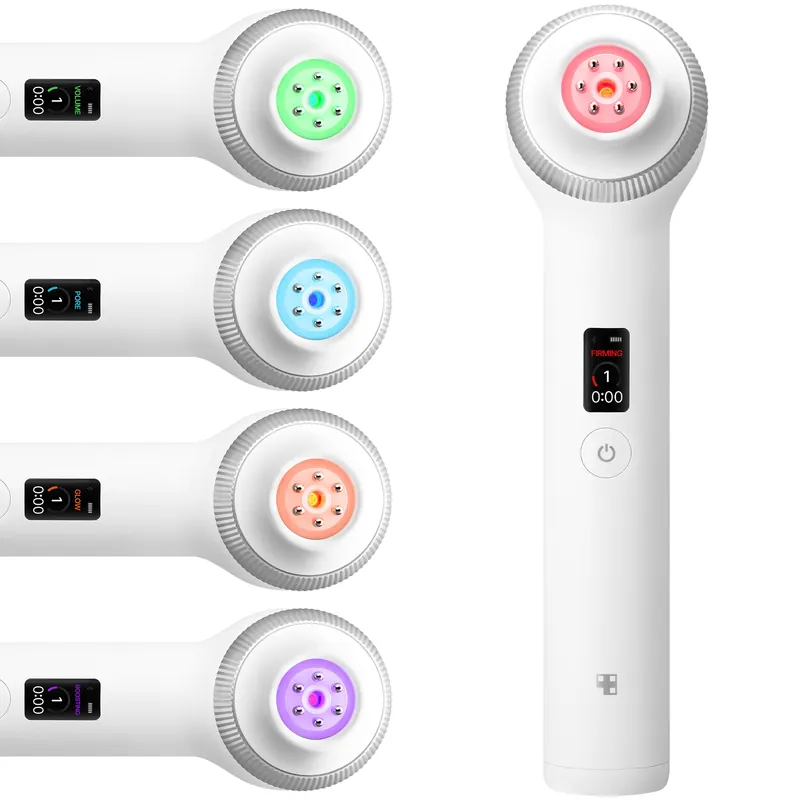 Image: MedicubeMedicube RF Ultra Tune 40.68 Image: MedicubeMedicube RF Ultra Tune 40.68 | RF + microcurrent | Auto-adjusts output if you stop moving; starts at level 1 | 5–10 min, 1–3x/day | No gel (over skincare) / rechargeable | No FDA record found in our search | $350 ($530 regular) |
Prices checked October 9, 2026 on each brand’s US site. RF devices cleared for home use fall under FDA product code PAY (“over-the-counter radiofrequency coagulation device for wrinkle reduction”). See what FDA labels mean.
What home RF can and can’t do
RF devices pass radiofrequency energy through the skin, warming the dermis. The heat is meant to trigger a repair response that supports collagen. In clinics, RF is well studied: a 2022 systematic review of face and neck RF found improvements in laxity, elasticity and wrinkles (Austin et al., 2022). Home devices run at lower energy, and their evidence is thinner, though there are controlled studies, such as a randomized split-face trial of a home RF device (Shu et al., 2022).
Read the clearances closely. The home RF clearances we checked are for the “non-invasive treatment of mild to moderate facial wrinkles” in adults with Fitzpatrick skin types I–IV. That’s narrower than “skin tightening” or “lifting” in marketing copy. In the study FDA reviewed for the NEWA device, 59 of 62 people who completed treatment improved by at least one grade on a wrinkle scale after 4 weeks of home use, judged from photos by dermatologists. There was no control group, and improvement didn’t continue after people stopped (FDA De Novo summary DEN150005).
CurrentBody Skin RF Radio Frequency Skin Tightening Device
- Technology
- RF at 1 MHz with “Skin Sense” temperature control that CurrentBody says keeps skin at 104°F (FDA summary: maximum 40.5 ± 0.5 °C)
- Routine
- 5 minutes per area with a liberal layer of RF gel; CurrentBody suggests once a week for 8 weeks, then every 4–8 weeks. A full-face routine takes about 70 minutes
- Power
- Mains cable (not cordless)
- Regulatory
- FDA 510(k) K232424, cleared March 2024 for mild to moderate facial wrinkles, Fitzpatrick I–IV
- Price
- $385.99 device; $448.99 “RF Special Kit”
The CurrentBody does the most important thing well: it measures skin temperature and adjusts output, so you don’t have to judge the heat yourself, and it cuts out if it loses skin contact. The once-a-week schedule is easier to keep than daily routines. The trade-offs are a cable and gel. CurrentBody reports that 89% of users saw improved skin tightness in 8 weeks; that’s a brand figure. It also says the device won’t reduce facial fat.
Skip it if: you want cordless use, or you have very sensitive or damaged skin, sunburn or tattoos in the area (CurrentBody advises against use).
TriPollar STOP Vx 2
- Technology
- “Triple-wave” Multi-RF with what TriPollar calls 2nd Generation Thermal Mapping, plus an Adaptive VIB vibration mode (two strengths) for the jawline
- Routine
- 4–5 minutes per area, about 9 minutes per session; 2–3 times a week for 6–8 weeks, then 2–4 times a month
- Power and gel
- Mains powered; TriPollar Activator Gel required (one included; refills $59)
- Regulatory
- TriPollar describes it as FDA-cleared. The TriPollar home clearances we found are for Pollogen’s “STOP U” devices (most recently K220322, 1 MHz, Fitzpatrick I–IV). TriPollar doesn’t name the 510(k) for STOP Vx 2, so we couldn’t confirm the match
- Price
- $699; Complete Kit $779. 30-day money-back guarantee, 1-year warranty (per TriPollar)
TriPollar’s parent, Pollogen, makes in-clinic RF platforms, and the STOP Vx 2 is the most fully featured home device here. The vibration mode is aimed at jawline definition, and the temperature indicator tells you when you’ve reached treatment heat. It costs nearly twice the CurrentBody, and you’ll need to budget for gel. Its warranty is shorter than some rivals’.
Skip it if: you want the clearest regulatory paper trail for the exact model, or you’re price-sensitive; the CurrentBody covers the essentials for $385.99.
FOREO FAQ 101
- Technology
- RF, pulsed LED in three colors and FOREO’s T-Sonic vibration; adjustable RF and LED settings
- Use
- Apply FOREO’s FAQ P1 primer ($69), then glide in small circles; guided treatments in the FAQ Swiss app, which you also use to unlock the device and register the warranty
- Build
- Wireless, rechargeable, waterproof silicone body
- Regulatory
- FDA 510(k) K222012 (“FAQ 101,” product code PAY)
- Price
- $390 at FOREO
If cables put you off RF, the FAQ 101 is the cordless choice with a clearance under its own name. The LED adds a second technology for the same session. FOREO’s results figures (“100% of users report…”) come from consumer trials, which measure perception, not clinical change. The app requirement won’t suit everyone.
Skip it if: you don’t want an app in the loop or an ongoing primer cost.
Medicube RF Ultra Tune 40.68
- Technology
- RF plus microcurrent; six tips that must all touch the skin before it activates
- Routine
- 5–10 minutes, 1–3 times a day, over your normal skincare; start at level 1
- Regulatory
- We found no FDA clearance or listing for it. Medicube’s clinical-test figures are brand-reported
- Price
- $350 sale ($530 regular) at Medicube
The Ultra Tune is the easiest RF routine here: no gel, rechargeable, and designed for daily use. Because we couldn’t find an FDA record, and the cleared devices above have a verifiable paper trail, it ranks fourth. See every Medicube device compared.
Skip it if: FDA clearance matters to you.
Also considered
- NEWA Plus ($439) and NEWA Classic ($339). NEWA has the most detailed public FDA record of any home RF device (De Novo DEN150005), but every device on its US store showed as out of stock when we checked on October 9, 2026.
- FOREO FAQ 102 ($590). Adds EMS to RF and LED, and has its own clearance (K240616). Worth it only if you want muscle stimulation too; see the best anti-aging devices over $500.
- Silk’n Titan MultiPlatform ($549). Combines bipolar RF, low-level laser and infrared heat, with a stated maximum of 109.4°F. The Silk’n clearance we found (K230013) is for a different model, the Titan AllWays, which wasn’t on Silk’n’s US store.
Who shouldn’t buy an at-home RF device
Each device has its own manual, so read it before you buy. As a guide, FDA’s summary for the NEWA device lists these contraindications and warnings (DEN150005):
- Don’t use it if you have an implanted pacemaker, arrhythmia or another serious heart condition.
- Avoid it if you’re pregnant or breastfeeding, have metal implants or piercings in the treatment area, have lesions in the area, have a blood-clotting disorder or take blood thinners, have an autoimmune disorder or diabetes, or have used isotretinoin (Accutane) in the past 6 months.
- Darker skin: safety and effectiveness in Fitzpatrick types V–VI weren’t established for NEWA, and the CurrentBody and TriPollar clearances we read are also for types I–IV.
- Deep wrinkles or real sagging: home devices are cleared for mild to moderate wrinkles. A dermatologist can tell you whether in-clinic treatment is a better use of the money.
- Heat-sensitive skin: RF works through heat, and the American Academy of Dermatology lists heat among common rosacea triggers. See anti-aging devices for sensitive skin.
If heat isn’t for you: how non-focused ultrasound differs
If RF is off the table because heat makes you flush, non-focused ultrasound is a different, gentler technology: it sends low-intensity sound waves through gel, with no electrical stimulation or deliberate heating, and most people barely feel it. It isn’t a substitute for RF’s firmness evidence. Ultrasound’s best-documented effect is helping skincare absorb (Azagury et al., 2014), and its anti-aging evidence is mostly small, brand-run studies. Compare options in the best at-home ultrasound devices.
Quadthera’s ultrasound devices are the MiniTitan and the four-frequency Titan ($1,100). Quadthera devices are Class I listed with FDA, not FDA-cleared. Read our Quadthera Titan review before you decide.
How we chose
We started from the home RF devices FDA has cleared (product code PAY) and the leading RF devices on US brand stores, then ranked them on regulatory record (a clearance we could verify by model name ranks highest), safety design (temperature control and cut-outs), a routine people can keep up, and price including gel or primer. Brand results figures are labeled as brand-reported. See how we evaluate, and for other technologies, the best at-home anti-aging devices.
Frequently asked questions
What is the best RF skin tightening device for home use?
Do at-home RF devices actually tighten skin?
How long does it take to see results from home RF?
Is RF safe for darker skin?
Does at-home RF melt facial fat?
RF vs microcurrent: which is better for sagging?
Sources
- CurrentBody: Skin RF Radio Frequency Skin Tightening Device
- TriPollar: STOP Vx 2
- TriPollar: Activator Gel
- FOREO: FAQ 101
- FOREO: FAQ 102
- Medicube US: RF Ultra Tune 40.68
- NEWA: Shop
- Silk’n: Titan MultiPlatform†
- FDA 510(k) database — K232424, K222012, K240616, K182774, K203665, K220322, K230013 checked via openFDA and FDA summaries, Oct 9, 2026
- FDA De Novo summary DEN150005 (NEWA Skin Therapy System)
- Austin GK, et al. Radiofrequency for face and neck rejuvenation: a systematic review. Lasers Surg Med. 2022
- Shu X, et al. Home radiofrequency device: randomized split-face trial. Dermatol Ther (Heidelb). 2022
- Azagury A, et al. Ultrasound mediated transdermal drug delivery. Adv Drug Deliv Rev. 2014
- American Academy of Dermatology: Rosacea triggers
- Quadthera Titan product page†
† GlowLab Reviews and Quadthera US have common ownership. We may benefit financially from purchases of Quadthera products.