NuFACE vs ZIIP vs Medicube: Which Microcurrent Device Should You Buy?
NuFACE, ZIIP and Medicube dominate searches for microcurrent devices, but they take very different approaches. Here’s how they compare on technology, controls, FDA status, ongoing costs and price, and who each one suits.
Our publisher, Dalmie LLC, sells Quadthera. We don't earn commissions from other links in this article. Disclosure.
The short verdict
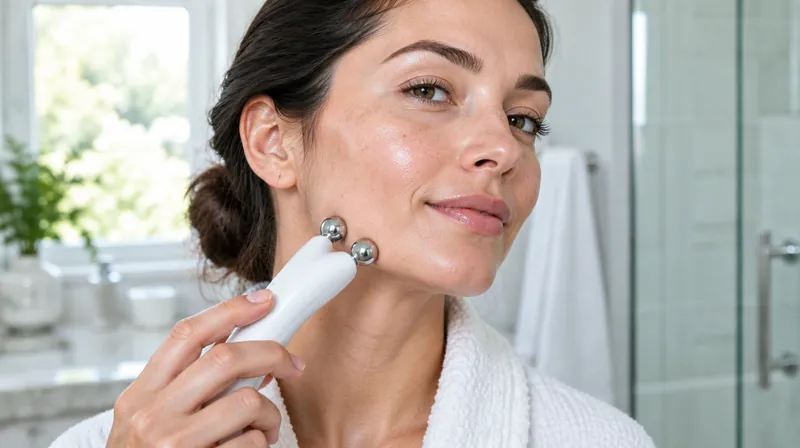
NuFACE TRINITY+ ($395) is the safest all-round pick: a dedicated, FDA-cleared microcurrent device with a long track record, add-on attachments and a 2-year warranty. Choose MINI+ ($250) to try microcurrent for less.
ZIIP HALO ($399.99) is for people who want guided, app-programmed treatments, including nanocurrent, and don’t mind premium gels.
Medicube Booster Pro X2 ($249) is for people who want variety and no gel more than they want a dedicated microcurrent tool. It’s a multi-mode booster, not a NuFACE equivalent.
Prices seen on each brand’s US site, October 7, 2026 (price as of Oct 2026). Research-based comparison; not hands-on tested.
Side-by-side
| NuFACE TRINITY+ / MINI+ | ZIIP HALO | Medicube Booster Pro X2 | |
|---|---|---|---|
| Technology | Microcurrent | Microcurrent + nanocurrent | Multi-mode: electroporation, microcurrent, EMS, “electric needles,” LED |
| Controls | 3 intensities; TRINITY+ takes attachments | App sends a program per treatment; 4-min facial without app | 7 modes; 6 levels (Marie Claire) |
| Conductive medium | Gel activator required (included) | ZIIP gel required | None; use over skincare |
| Brand routine | 5 min/day, 5x/week for 60 days, then 2–3x/week | Program-dependent | About 5 min per mode (Byrdie, original) |
| FDA status (our check) | Cleared: TRINITY+ K201782; Mini K191672 | Not stated on HALO page; ZIIP and ZIIP+ cleared (K161484, K212342) | Class I listing (ISA). Not cleared |
| Brand results claims | Consumer questionnaires (e.g., 15 min post-treatment) | Brand-linked study (e.g., 28% fewer visible wrinkles) | Brand-commissioned testing |
| Warranty / returns | 2 years / 60 days | 2 years / 30 days | See Medicube policy |
| Price seen | $395 TRINITY+ kit; $250 MINI+ kit | $399.99; $475.99 with gel kit | $249 ($299 regular) |
Prices checked October 7, 2026.
NuFACE: the benchmark
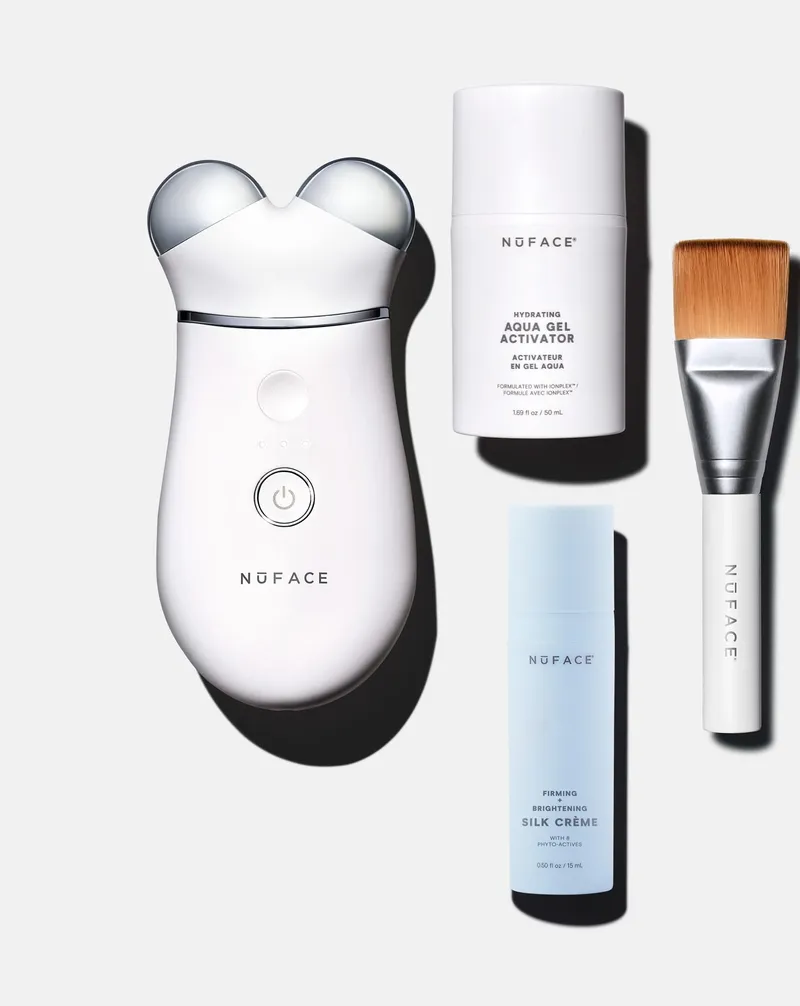
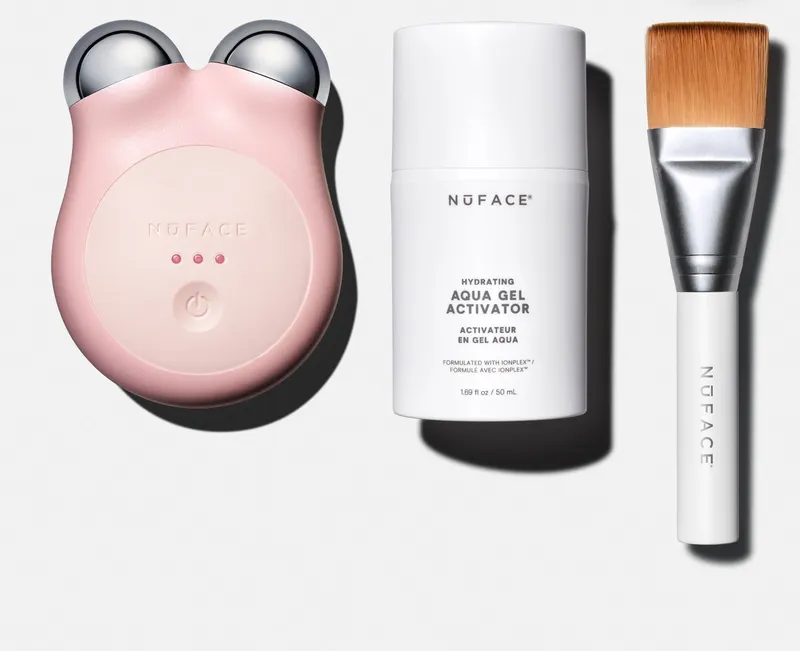
NuFACE’s maker, Carol Cole Company, has held FDA clearances for home microcurrent devices since 2007 (K072260). Its TRINITY+ (K201782) and its attachments are cleared, as are the MINI and FIX devices. Wirecutter, whose testers used several devices over months, picked the TRINITY+ as its top microcurrent device, while noting that results lasted from several hours to about a day (Wirecutter). The kit includes NuFACE’s Aqua Gel Activator. Refills cost $35 for 1.69 oz.
Best for: anyone who wants a proven, simple, dedicated microcurrent routine.
ZIIP: the programmable one
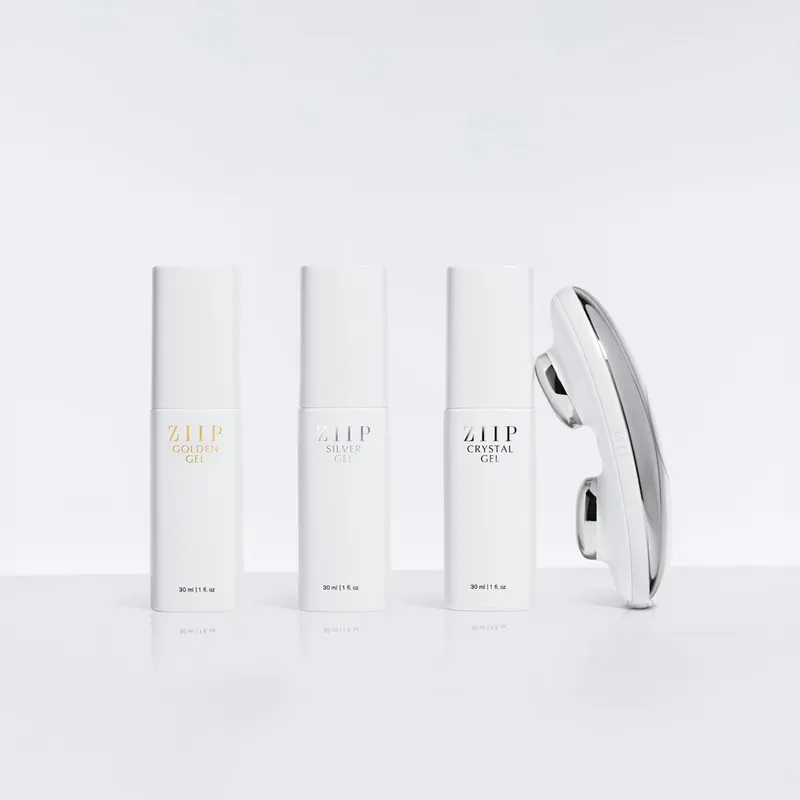
ZIIP HALO’s difference is software. The app sends different waveforms for different goals, mixing microcurrent with nanocurrent, an even lower current. If you like being guided through a routine, that’s a real advantage. ZIIP reports a 28% reduction in the look of wrinkles and a 27% improvement in elasticity in a study linked from its product page. It’s brand-run, so treat it as indicative. The catch is cost: ZIIP’s specialty gels run $59.99–$129.99, and its original Electric Complex Gel starts at $29.99.
Best for: people who enjoy app-guided routines and want treatment variety within microcurrent.
Medicube: the multi-tasker
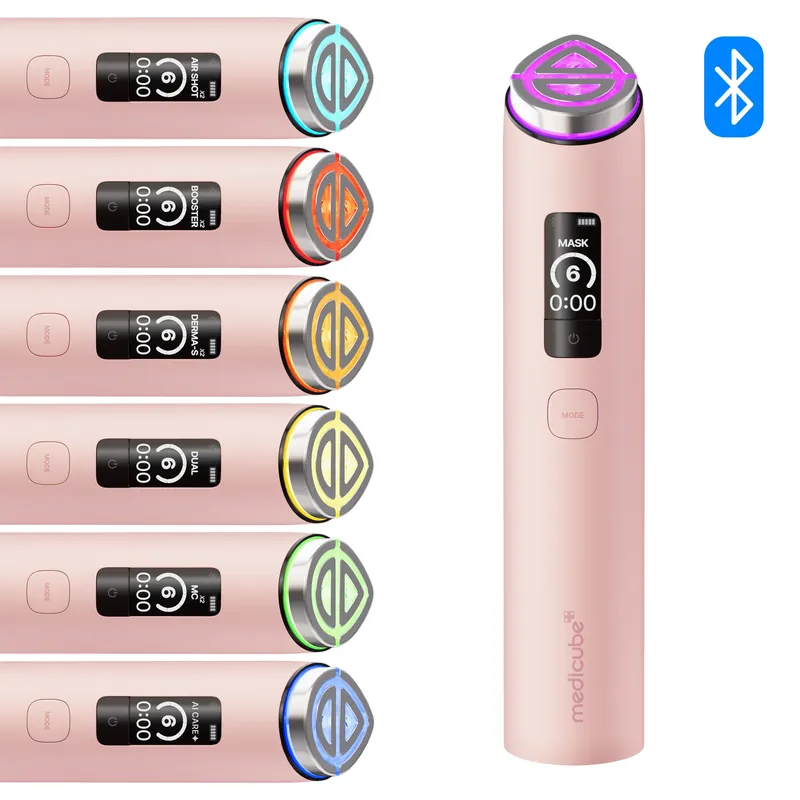
Medicube’s AGE-R Booster Pro X2 includes a microcurrent mode alongside electroporation (“Booster”), EMS (“Derma Shot”), “electric needles” (“Air Shot”) and LED. It works over your normal skincare with no gel, and it’s the cheapest of the three. Testers consistently report a same-day glow. The microcurrent function isn’t cleared by FDA the way NuFACE’s is; the device is a Class I listed massager. Read our full review.
Best for: K-beauty fans who want several technologies to experiment with at a low price.
Key differences that matter
- Dedicated vs multi-mode. NuFACE and ZIIP do one thing and are designed around it. Medicube spreads its design across many modes.
- Gel vs no gel. The gel step is the biggest daily-use difference. If you know you’ll skip it, Medicube removes the friction.
- Regulatory status. If FDA clearance matters to you, NuFACE has it clearly documented. Ask ZIIP which clearance covers HALO.
- Sensation. Microcurrent can tingle or zap, especially with too little gel. Medicube’s EMS and Air Shot modes are the most noticeable, per testers.
True cost of ownership
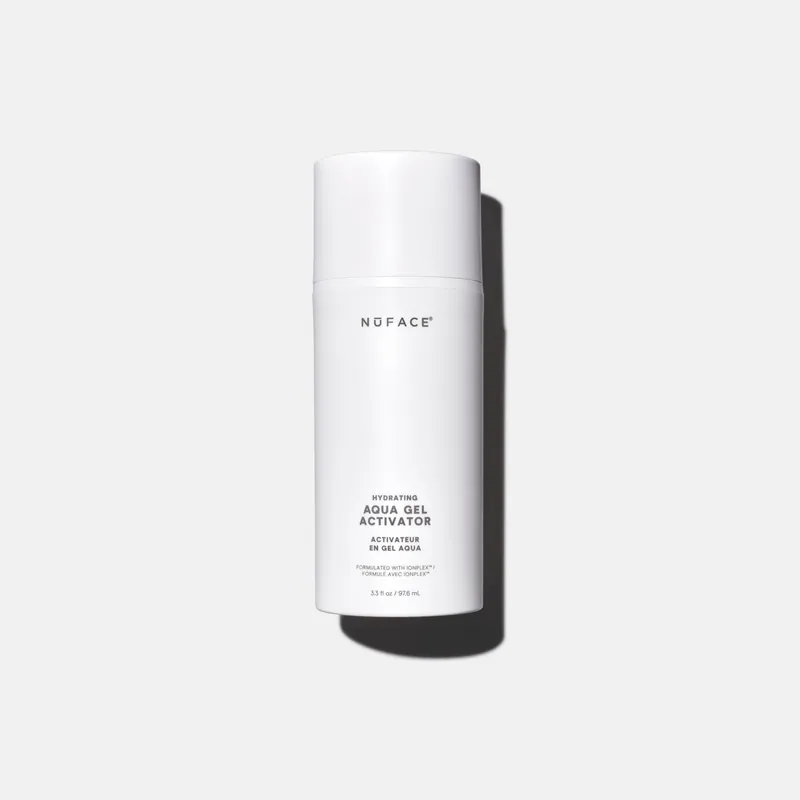
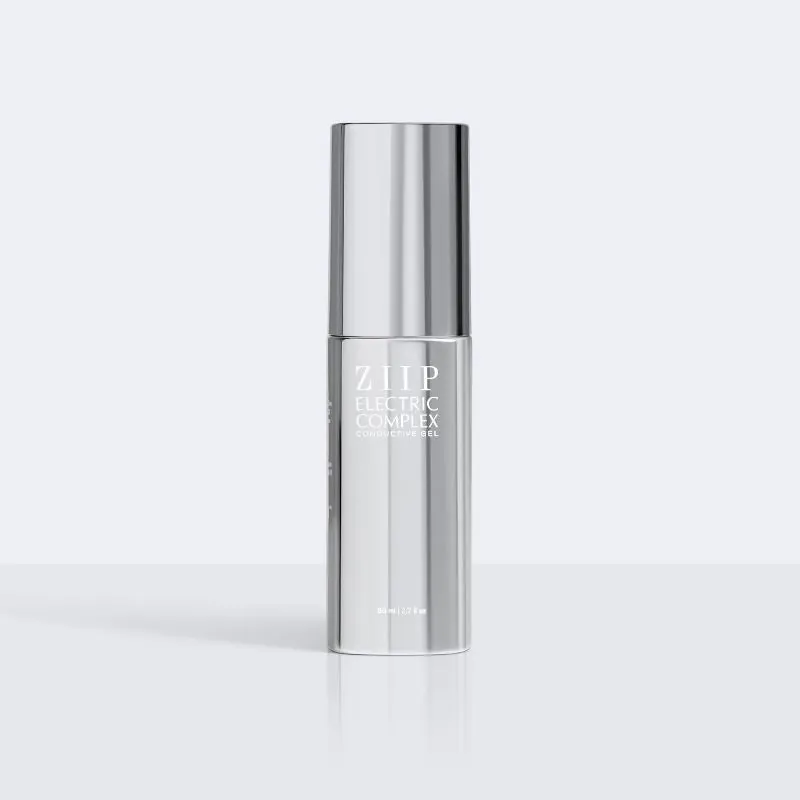
Over a year, gel matters. At NuFACE’s recommended routine, a gel refill is a recurring cost; ZIIP’s premium gels cost more per tube. Medicube has no gel cost but you’ll use your own serums. If price is the deciding factor, add a year of consumables to the sticker price before comparing.
How to choose
| If you want… | Pick |
|---|---|
| A proven, dedicated device with FDA clearance | NuFACE TRINITY+ |
| The cheapest way to try dedicated microcurrent | NuFACE MINI+ |
| App-guided programs and nanocurrent | ZIIP HALO |
| No gel and several technologies | Medicube Booster Pro X2 |
| No electrical sensation at all | Consider ultrasound or LED instead (below) |
For more options, including FOREO BEAR 2 and TheraFace PRO, see the best microcurrent facial devices.
Considering alternatives? How at-home ultrasound compares
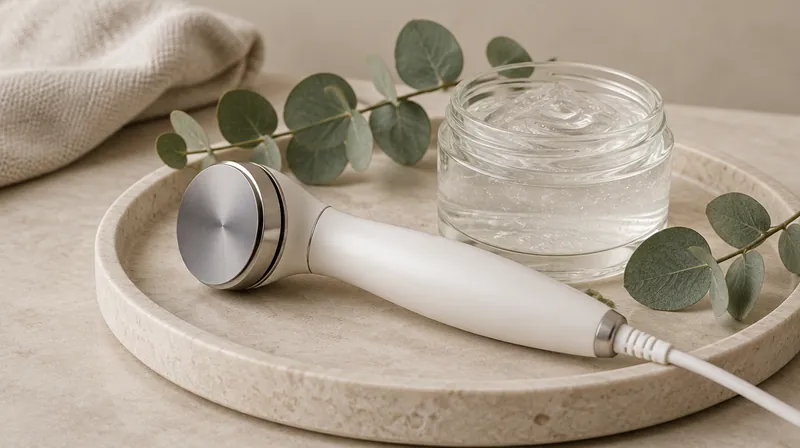
If what puts you off microcurrent is the gel-and-tingle routine, or you mainly want hydration, texture and better absorption rather than a sculpted look, non-focused ultrasound is worth comparing. It sends low-intensity sound waves into the skin through gel, with no electrical stimulation, and most people barely feel it. Its anti-aging evidence is mostly brand-run, like microcurrent’s. Its best-documented effect is increasing skin permeability (Azagury et al., 2014).
Disclosure: GlowLab's publisher, Dalmie LLC, is a US retailer of Quadthera and may earn from sales. Learn more.| Device | Technology | Sensation | FDA status | Price seen |
|---|---|---|---|---|
| NuFACE TRINITY+ | Microcurrent | Can tingle | 510(k) K201782 | $395 |
| Medicube Booster Pro X2 | Multi-mode electrical | Some modes tingle | Class I listing (ISA) | $249 |
| Quadthera Titan† | Non-focused ultrasound, 1/3/10/19 MHz | Barely felt | Class I listing (ISA). Not cleared | $1,100 |
| THOME The Glow Signature | Non-focused ultrasound, 3 + 10 MHz | Gentle | Class I listing (ISA). Not cleared | $399 ($329 sale listing) |
† GlowLab's publisher, Dalmie LLC, is a US retailer of Quadthera and may earn from sales. Prices checked October 7, 2026.
The Titan publishes the widest frequency range of the standalone handhelds we found but costs far more than any microcurrent device here; THOME is the more affordable way to try ultrasound. If you want an FDA-cleared device and a quick lifted look, microcurrent remains the better fit. Read more: what is at-home ultrasound skincare? · best at-home ultrasound devices · Titan vs Medicube.
Frequently asked questions
Is Medicube’s microcurrent as good as NuFACE?
Which is easiest for beginners?
Do I have to use the brand’s own gel?
How often should I use a microcurrent device?
Is any of these FDA-approved?
Sources
- NuFACE: TRINITY+ Starter Kit
- NuFACE: MINI+ Starter Kit
- NuFACE: Aqua Gel Activator
- ZIIP: HALO product page
- ZIIP: Electric Complex Gel
- Medicube US: Booster Pro X2
- Wirecutter: The Best Microcurrent Face-Tightening Products and Tools
- Marie Claire: Medicube Booster Pro X2 review
- Byrdie: How do you actually use the Medicube Age-R Booster Pro?
- FDA 510(k) database — K201782, K191672, K161484, K212342 checked via openFDA Oct 7, 2026
- FDA Establishment Registration & Device Listing database — Medicube AGE-R Booster Pro X2 listed under APR Co., Ltd., code ISA
- Azagury A, et al. Ultrasound mediated transdermal drug delivery. Adv Drug Deliv Rev. 2014
- Quadthera Titan product page (our publisher, Dalmie LLC, retails Quadthera)
- THOME The Glow Signature product page