Ultrasound vs LED Masks vs Microcurrent: Which Actually Works for Aging Skin?
If your main goal is aging skin (fine lines, firmness, texture, dullness), which of the three most talked-about home technologies is worth your time? Here’s what the evidence supports, concern by concern.
Our publisher, Dalmie LLC, sells Quadthera. We don't earn commissions from other links in this article. Disclosure.
The short answer
- Fine lines and wrinklesEvidence: strongest of the three
Randomized, sham-controlled home-mask trials show wrinkle improvement over about 12 weeks.
- Temporary contour and liftEvidence: limited, mostly temporary effects
FDA-cleared devices exist. Testers describe short-lived definition that needs near-daily upkeep.
- Dehydrated, sensitive or textured skinEvidence: mechanism strong, device data mostly brand-run
Gentlest of the three and designed to work with your skincare. Firming claims are still early.
There’s no single winner. For fine lines, LED has the best evidence. For a quick, temporary contour, microcurrent. For dehydrated, dull or reactive skin, and for getting more from your skincare, non-focused ultrasound is the gentlest option, though its anti-aging evidence is still early. Many people end up pairing two.
Evidence scorecard
Disclosure: GlowLab's publisher, Dalmie LLC, is a US retailer of Quadthera and may earn from sales. Learn more.| Technology | Fine lines | Firmness / lift | Texture, hydration, glow | Gentleness | FDA-cleared options? |
|---|---|---|---|---|---|
| LED (red/NIR) | Strongest: RCTs incl. sham-controlled | Modest | Some support | High (protect eyes) | Yes, several masks |
| Microcurrent | Limited | Temporary lift reported | Limited | Moderate (can tingle) | Yes (e.g. NuFACE) |
| Ultrasound (non-focused) | Early, brand-run data | Early, brand-run data | Brand data + absorption mechanism | Highest (barely felt) | None found; popular models Class I listed |
Our read of the evidence as of October 2026. “Brand-run” means studies paid for by the manufacturer, usually small and not independently published. Ultrasound examples include Quadthera (our publisher, Dalmie LLC, retails Quadthera), THOME and glow.m.
Best match by aging concern
- Crow’s feet and fine lines: LED first.
- Loss of definition along the jaw or cheeks: microcurrent for short-term definition, or EMS for muscle tone (see EMS).
- Dehydration, dullness, rough texture: ultrasound with a hydrating gel or serum, or LED.
- Sensitive or reactive skin that dislikes devices: ultrasound, or LED.
- Real laxity: none of these three is a strong home answer. Consider RF or talk to a dermatologist about in-office options.
LED masks for aging skin
Red (≈630 nm) and near-infrared (≈830–850 nm) light is the most studied at-home approach. In a multi-center, randomized, double-blind trial, a home mask (630 nm LED + 850 nm infrared, 9 minutes, 5 days a week, 12 weeks) improved crow’s-feet scores compared with a sham device (2025 trial). Reviews call the evidence “reasonable,” while noting small trials and industry funding (Glass, 2021). The practical downsides are patience (results take weeks to months) and price for the best masks. Several are FDA-cleared, which you can confirm by K-number.
Microcurrent for aging skin
Microcurrent is popular for a quick “lifted” look, and leading devices such as NuFACE hold FDA clearance. Testers usually describe the results as temporary: Wirecutter’s panel noted a temporary lift and slight definition (Wirecutter). It needs gel and near-daily sessions, and some people find the sensation unpleasant. Multi-function devices such as the Medicube Booster Pro include a microcurrent mode.
Ultrasound for aging skin
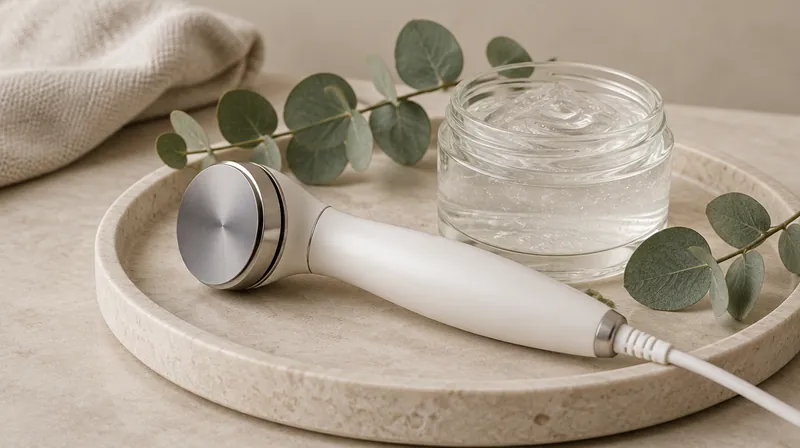
Disclosure: GlowLab's publisher, Dalmie LLC, is a US retailer of Quadthera and may earn from sales. Learn more.Non-focused home ultrasound devices use megahertz sound waves through a gel. Multi-frequency models switch between depths. The Quadthera Titan, for example, publishes 1, 3, 10 and 19 MHz, and THOME’s devices use 3 + 10 MHz. The best-supported mechanism is that ultrasound can temporarily make skin more permeable (Azagury et al., 2014), which is why these devices are designed to be used with your skincare. Brands report improvements in firmness, pores and texture from their own studies, such as Quadthera’s 4-week, 20-person evaluation (our publisher, Dalmie LLC, retails Quadthera) and THOME’s published claims. These are encouraging but small and sponsored.
Where ultrasound fits for aging skin: it’s the most comfortable option for mature skin that’s also dry or reactive, and it pairs naturally with hydrating or peptide serums. It isn’t a substitute for clinical focused ultrasound or for sunscreen and retinoids. Learn more in What is at-home ultrasound skincare? or compare devices in our ultrasound buying guide.
Combining them
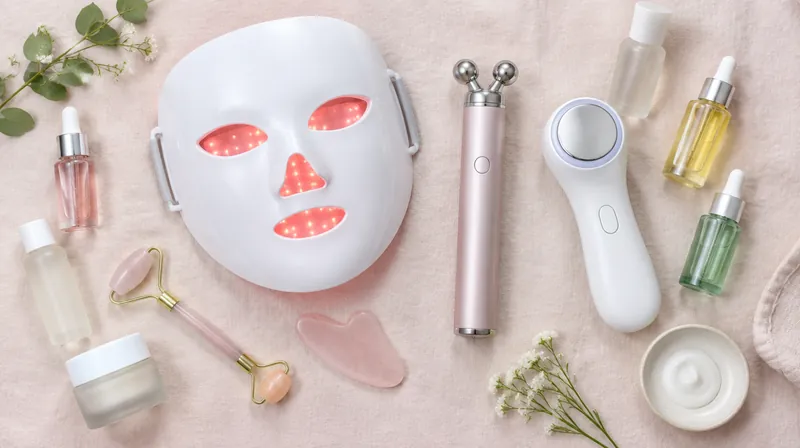
A practical combination for aging skin: LED three to five times a week for the evidence-backed base, plus either microcurrent before events or ultrasound with a hydrating serum for texture and comfort. Add one device at a time so you can tell what’s working. Keep wearing sunscreen; no device makes up for UV damage.
Frequently asked questions
Which is best for wrinkles: LED, microcurrent or ultrasound?
Which is best for sagging skin?
Is ultrasound good for mature, sensitive skin?
How long until I see results?
Sources
- Home LED/IRED mask for crow’s feet: multicenter randomized double-blind sham-controlled trial. Medicine. 2025
- Glass GE. Photobiomodulation: the clinical applications of low-level light therapy. Aesthet Surg J. 2021
- Wirecutter: The Best Microcurrent Face-Tightening Products and Tools
- FDA 510(k) K072260 — NuFACE (Carol Cole Company)
- Azagury A, et al. Ultrasound mediated transdermal drug delivery. Adv Drug Deliv Rev. 2014
- Quadthera Titan product page (our publisher, Dalmie LLC, retails Quadthera)
- THOME The Glow Signature product page